







In the UK, approximately 98 million cups of coffee are consumed every day. It’s one of the most pored-over drinks on the planet, prescribing focus and performance, as well as routine and ritual. And with the past decade observing an uprising of a cafe culture associated with one of speed and quantity – independents, global chains, supermarkets, petrol stations – our high streets, as well as our lifestyles, have succumbed to the gratification of a readily-accessible caffeine fix.
But what does caffeine actually do for you? We know it can help wake you up and energise you, but do we know what it does to our bodies – and how much is too much?
What Is Caffeine?
Caffeine is a natural stimulant. It stimulates the brain and central nervous system, in addition to increasing the circulation of chemicals, such as cortisol.
Caffeine is commonly found in tea, coffee and cacao plants.
Effects Of Caffeine On Your Body
The effects of caffeine may start even before your first sip. Once consumed, caffeine is absorbed into the bloodstream from your gut, before travelling to your liver and other bodily organs once broken down – the brain being the most susceptible.
Once in the brain, caffeine binds itself to adenosine, a neurotransmitter that relaxes the brain. Once bound, caffeine blocks its receptors to reduce tiredness and increase alertness. Without caffeine, levels of adenosine would steadily rise throughout the day, causing tiredness and fatigue.
Caffeine typically exerts its effects quickly. The effects of caffeine can take as little as five to thirty minutes to take effect, and can last up to 12 hours. But normally, the effects of caffeine are short-term.
The Health Benefits Of Caffeine
In addition to brain function, low-to-moderate caffeine consumption can exert a positive effect across a number of bodily functions and organs:
- Mood: low (~50 – 250 mg) to moderate doses (~250 – 400 mg) of caffeine can positively impact an individual’s overall mood and behaviour, such as increased energy, sociability and self-confidence.
- Performance: caffeine can exert a positive effect on neural mechanisms that trigger physiological reactions that contribute to a significant improvement on endurance and exercise capacity.
Differences Between Natural Caffeine and Synthetic Caffeine
The chemical structure of natural caffeine and synthetic caffeine are indistinguishable.
Natural Caffeine
Foods and beverages that naturally contain caffeine are typically richer in other nutrients and beneficial compounds than foods to which synthetic caffeine has been added. For example, coffee contains small amounts of several B vitamins, as well as magnesium, potassium and phosphorus.
Natural Caffeine is only found in the following:
- Coffee: espresso, filtered coffee
- Tea: black, green, matcha, white
- Cocoa: chocolate, hot chocolate
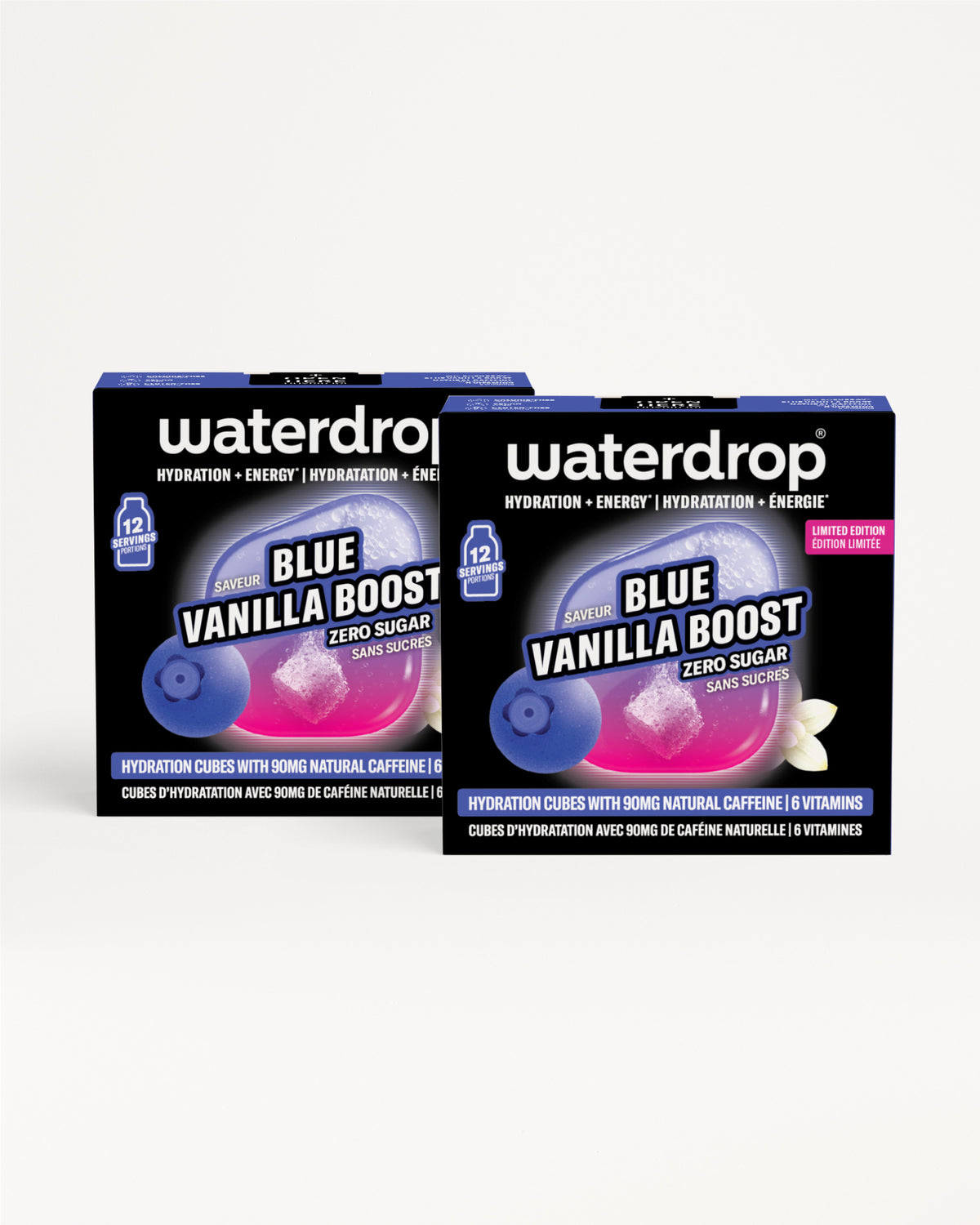
Discover a welcome pick-me-up with waterdrop® Microenergy.
Synthetic Caffeine
Synthetic caffeine was first produced – or ‘synthesised’ – in the 1800s, and still to-date, many consumers are unable to identify where the caffeine in their food or drink comes from – or even aware that this version of caffeine exists.
One of the main differences between natural caffeine and synthetic caffeine is that the synthesised version is cheaper to produce. As a result, it is commonly – and widely – found in bottled beverages, including soft drinks and energy drinks.
When taking a closer look, the molecular levels in both versions of caffeine are indistinguishable.
Caffeine: Daily Allowance
If you’re over the age of 18, the safe daily amount of caffeine of 400mg per day (equivalent to four or five cups of coffee). If you’re pregnant or breastfeeding, the amount is halved to 200mg per day.
For children and teenagers, the recommended safe limit is 3mg of caffeine per kg body weight. However, the active consumption of caffeine-containing products by children is not recommended.
Examples of approximate caffeine content:
- an espresso (60ml): 80mg caffeine
- a cup of black tea (220ml): 50mg caffeine
- an energy drink (250ml): 80mg caffeine
- a bar of milk chocolate (50g): 10mg caffeine
Anything that exceeds the above-recommended safety guidelines is deemed dangerous with negative effects.
Symptoms Of Caffeine Overdose
Common symptoms of consuming too much caffeine include:
- Headache
- Nervousness
- Irritability
- Rapid heart rate
- Tremors or shaking
Prolonged consumption of caffeine may, over time, develop further symptoms such as: addiction and dependency, high blood pressure, fatigue, digestive issues, and frequent urination (or sense of urgency).
Conclusion
Coffee, and caffeine in general, is one of nature’s gifts – it helps us to be efficient, faster, and more confident in what we’re doing. This is true, but the next time you read ‘caffeine’ on a food or beverage label, ask yourself – where did it come from?
Caffeine is addictive, it’s a drug – this is not new – it’s essential to regulate your intake, listen to your body, and know what type of caffeine is in your food or drink. There is little evidence that cutting out coffee (or caffeine) is beneficial to your health; as outlined above, properties of natural caffeine can support protective health and optimal wellbeing.
Sources:
‘Coffee Consumption’: https://britishcoffeeassociation.org/coffee-consumption/ [accessed: 24/07/2024]
‘Effect of one time coffee fragrance inhalation on working memory, mood, and salivary cortisol level in healthy young volunteers: a randomized placebo controlled trial’: https://www.ncbi.nlm.nih.gov/pmc/articles/PMC6881620 [accessed: 24/07/2024]
‘Caffeine Consumption through Coffee: Content in the Beverage, Metabolism, Health Benefits and Risks‘: https://www.mdpi.com/2306-5710/5/2/37 [accessed 24/07/2024]
‘Natural vs. Synthetic Caffeine: What Foods Naturally Contain Caffeine?: https://www.healthline.com/nutrition/natural-caffeine#natural-sources [accessed: 25/07/2024]
‘How caffeine affects your body’: https://www.bupa.co.uk/newsroom/ourviews/how-caffeine-affects-body [accessed: 25/07/2024]
‘Caffeine: How much is too much?’: https://www.mayoclinic.org/healthy-lifestyle/nutrition-and-healthy-eating/in-depth/caffeine/art-20045678 [accessed: 25/07/2024]
‘Scientific Opinion on the substantiation of health claims related to caffeine and increased fat oxidation leading to a reduction in body fat mass (ID 735, 1484), increased energy expenditure leading to a reduction in body weight (ID 1487), increased alertness (ID 736, 1101, 1187, 1485, 1491, 2063, 2103) and increased attention (ID 736, 1485, 1491, 2375) pursuant to Article 13(1) of Regulation (EC) No 1924/2006.’: https://efsa.onlinelibrary.wiley.com/doi/pdf/10.2903/j.efsa.2011.2054 [accessed 17/02/2026]
Nawrot, P.; Jordan, S.; Eastwood, J.; Rotstein, J.; Hugenholtz, A.; Feeley, M. Effects of caffeine on human health. Food Addit. Contam. 2003, 20, 1–30 [accessed online: 24/07/2024]
Eskelinen, M.H.; Ngandu, T.; Tuomilehto, J.; Soininena, H.; Kivipelto, M.J. Midlife coffee and tea drinking and the risk of late-life dementia: A population-based CAIDE study. J. Alzheimers Dis. 2009, 16, 85–91 [accessed online: 24/07/2024]
Larsson, S.C.; Wolk, A. Coffee consumption and risk of liver cancer: A meta-analysis. Gastroenterology 2007, 132, 1740–1745 [accessed online: 24/07/2024]


